

For thousands of years, Rudraksha has been revered as one of the most sacred elements in Hindu spiritual tradition. From yogis to householders, millions wear these beads for peace, protection, clarity of mind and deeper meditation. Modern scientific studies have also begun exploring its potential health benefits. But what makes these beads so special? Where do they come from, and who can wear them?
This blog takes you through its history, origin, types, benefits, scientific research, and how to choose the right mala for daily use.
What is Rudraksha?
Rudraksha is the dried seed of Elaeocarpus ganitrus, a sacred tree mainly found in Himalayan regions and Southeast Asia, primarily used in malas for meditation and daily wear.
The surface of each seed has natural vertical lines called mukhis (faces). These mukhis determine the type and spiritual properties of the bead.
The word “Rudraksha” comes from “Rudra” (Lord Shiva) and “Aksha” (tears). It is believed that the seeds emerged from Shiva’s tears that blessed the earth with these sacred seeds, carrying his energy of protection and stability.
History of Rudraksha
According to the Shiva Purana, Rudraksha emerged from the tears of Lord Shiva after a long meditation. Wherever his tears fell, Rudraksha trees grew.
Throughout history:
-
Yogis wore Rudraksha malas for concentration.
-
Sages wore rudraksha for protection, meditation, and spiritual growth.
-
Kings and warriors wore them for courage, confidence and focus.
-
Ayurvedic healers used the seed extracts for therapeutic purposes.
-
Scriptures like Padma Purana, Shiva Purana, and Upanishads describe the power of different mukhis.
Ancient Quote:
"One who wears Rudraksha is freed from all sins and finds his path to liberation." — Shiva Purana
Where Rudraksha is Grown
Rudraksha trees grow in specific tropical and subtropical regions. The main sources are:
-
Nepal – Known for the best quality beads: larger, heavier, and well-defined mukhi (faces).
-
India – Grown mainly in the Himalayan foothills
Nepal beads are traditionally considered the most premium due to their size, density, and clear mukhi lines.
How Rudraksha is Processed 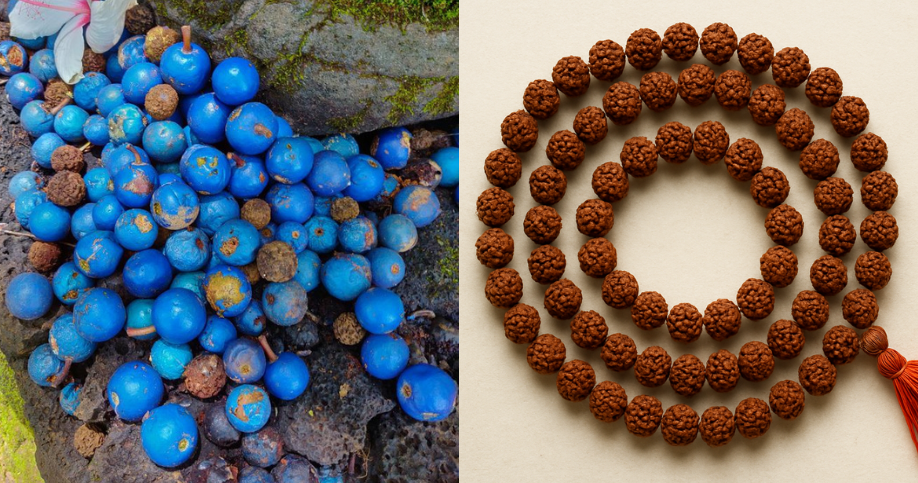
The journey from fruit to sacred bead involves:
1. Harvesting: Once the trees bear fruit, mature fruits (blue/purple) are collected during late autumn/winter.
2. Removing the pulp: The fruits are soaked, washed, and gently rubbed to remove the outer layer. The blue pulp softens in water, making it easy to extract the seed inside. Soft brushing is done to clear debris from mukhi lines.
3. Natural Drying: After cleaning, the Rudraksha beads are naturally dried by spreading them in shade or mild sunlight, allowing them to harden slowly and evenly. This gentle drying preserves their natural oils and prevents cracks, keeping the beads strong and durable.
4. Sorting: Rudraksha beads are carefully sorted based on their size, shape, and the clarity of their mukhi (faces). This step ensures that each bead is graded correctly for quality, uniformity, and authenticity before being used for malas or jewelry.
5. Drilling & Stringing: If the natural hole is too small, artisans drill carefully without damaging grooves.
Authentic Rudraksha is never polished with chemicals — it is cleaned only with natural methods.
Size range of Rudraksha
- Small beads (5 mm – 10 mm)
These compact beads are ideal for bracelets, children’s malas, and lightweight daily-wear malas. They are comfortable to wear for long hours and suit people who prefer subtle, minimal jewellery.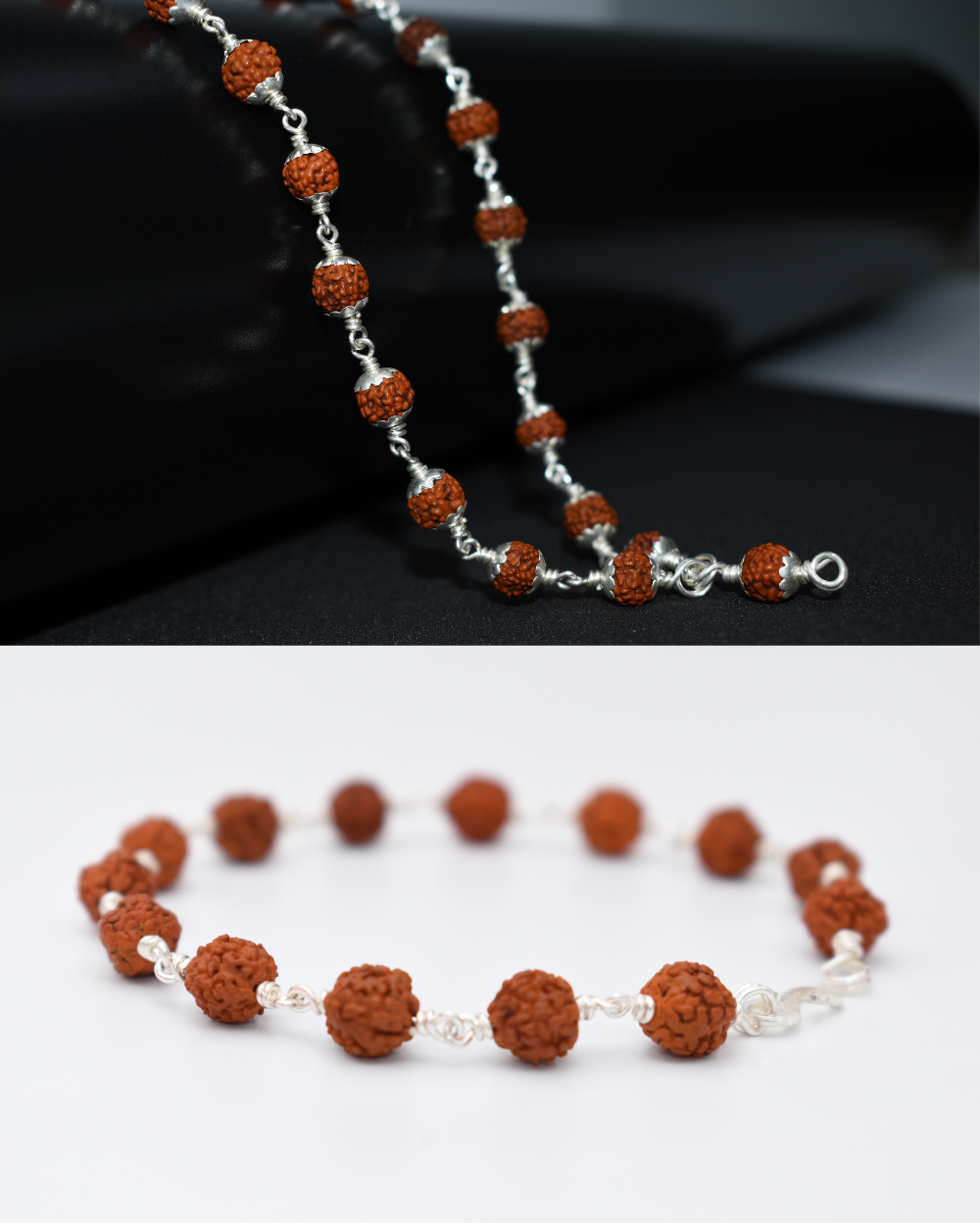
- Medium beads (12 mm – 18 mm)
This size range is most commonly used for single Rudraksha pendants. They offer a balanced look—neither too small nor too large—and are perfect for everyday spiritual wear.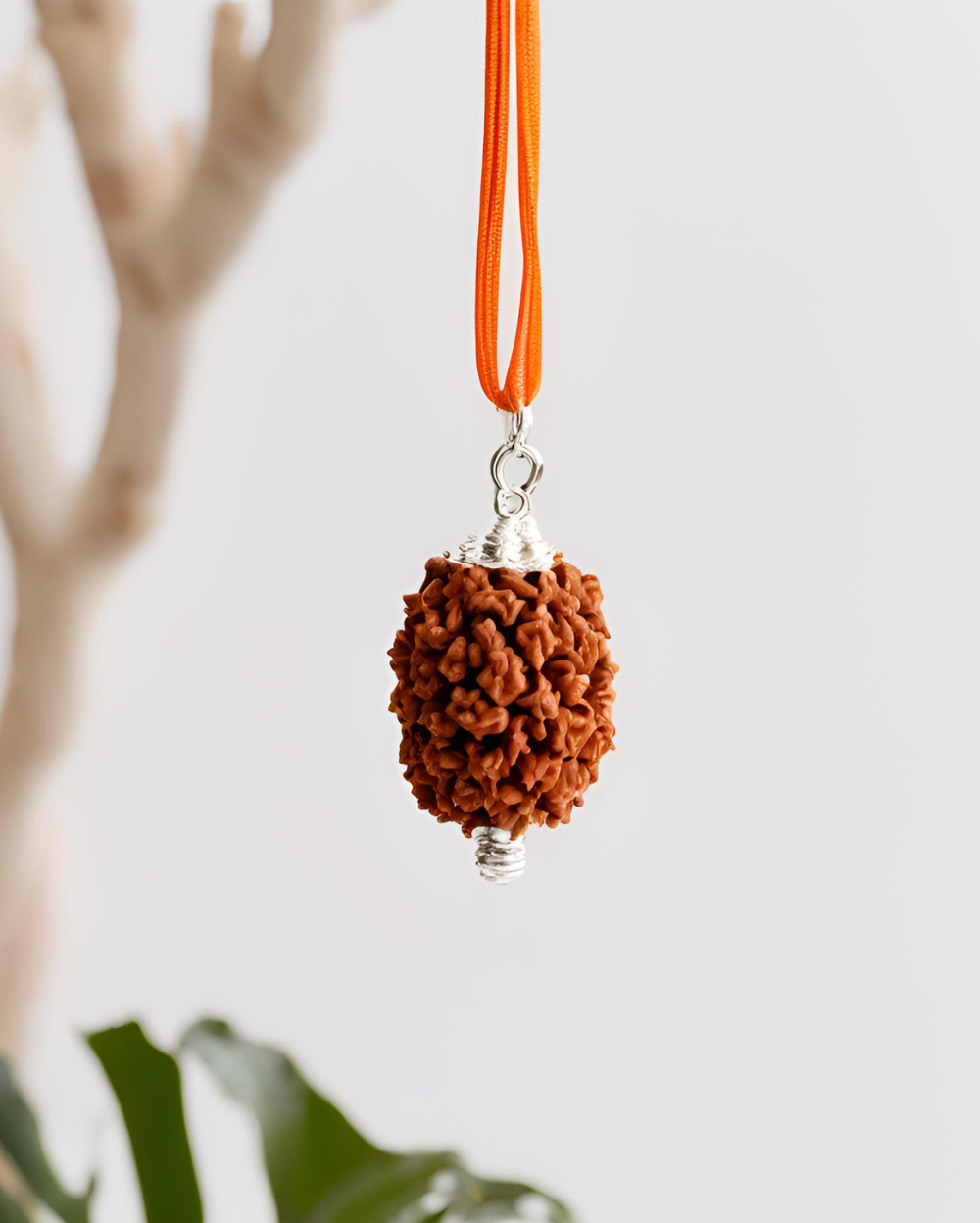
- Large beads (20 mm and above)
These bigger beads are usually chosen for malas offered to deities, or by meditators, serious spiritual practitioners, and collectors. Large Rudraksha beads carry strong presence, have more pronounced mukhi lines, and are valued for their purity, rarity, and craftsmanship. However, they can be slightly heavy for regular daily wear.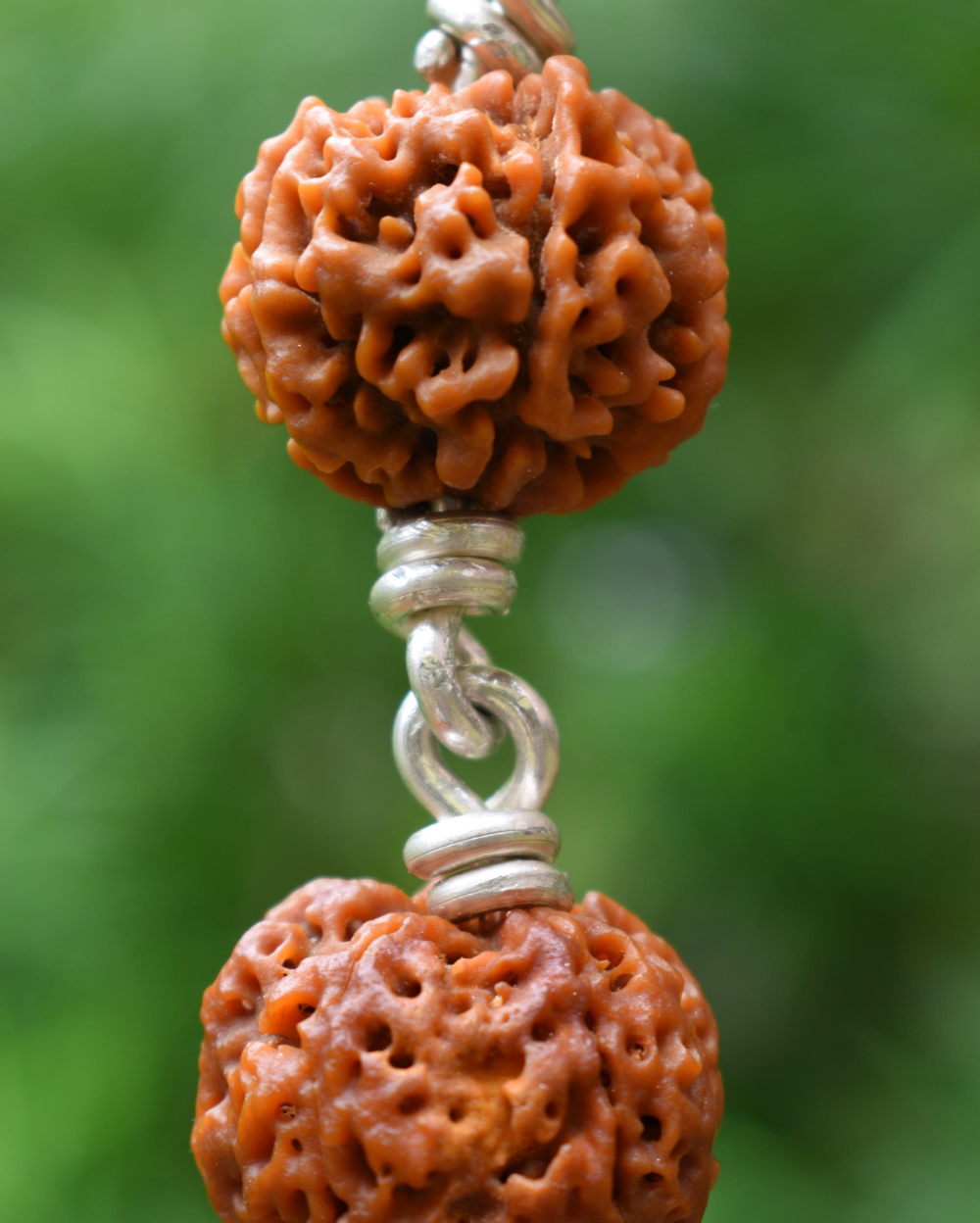
Types of Rudraksha beads (Mukhi)
Rudraksha beads are primarily classified by their mukhi (faces), which range from 1 mukhi to 21 mukhi, with each type offering a distinct spiritual benefit. They also vary in size, texture, and energy based on their natural formation. Special varieties like Gauri Shankar and Ganesh Rudraksha are rare, naturally formed beads valued for their unique spiritual significance.
How Many Beads Should You Wear?
Traditionally, malas come in sacred numbers: 108 + 1 beads, 54 + 1 beads, 36 + 1 beads, 27 + 1 beads, and single-bead pendants.
Which is the Most Commonly Used Rudraksha?
The most commonly used Rudraksha is the Panchamukhi (5-Mukhi) Rudraksha.
It is widely worn by people of all ages because it is easily available, affordable, suitable for everyone and daily wear, and recommended in ancient texts for general wellbeing.
It is known for balancing the mind, reducing stress, emotional balance and supporting spiritual growth. Because it is stable in energy and suitable for daily use, it is used in most of Rudraksha malas,
Priests, meditators, students, working professionals, and even beginners prefer Panchamukhi because it provides overall benefits without any restrictions.
Rudraksha mala
Benefits of wearing Rudraksha
Just one bead - endless benefits
Rudraksha is believed to influence physical, mental, and emotional well-being:
-
Brings peace and mental clarity
-
Enhances concentration & focus
-
Protects from negative energies
-
Reduces stress, anxiety and boosts energy
-
Creates a positive energy shield around you
-
Supports heart health and blood pressure
-
Enhances meditation
-
Boosts confidence and clarity
-
Enhances focus during meditation
-
Balances energy levels throughout the day
Who Can Wear Rudraksha?
- Anyone can wear Rudraksha: there are no religious, caste or lifestyle restrictions.
- Ideal for students, professionals, meditators, yogis, and spiritual practitioners seeking focus, calmness, and grounding.
- Many traditions also encourage pregnant women to wear it for emotional stability and protection.
- Rudraksha naturally adapts to the wearer’s energy, helping bring balance, clarity, and a sense of inner peace.
How to verify a genuine Rudraksha?
-
Check the Mukhi Lines: Look for natural vertical lines running continuously from top to bottom.
-
Feel the Texture: Genuine beads feel woody, coarse, and slightly rough.
-
Check the Weight: Real Rudrakshas are dense and feel heavier than fake beads of the same size.
-
Look for Natural Imperfections: Small pits and grooves indicate authenticity.
-
Avoid Dyed or Cracked Beads: Natural beads have earthy brown tones and no chemical dyes or cracks.
Rudraksha is not just a spiritual ornament - it is a sacred natural tool that supports inner peace, health, and spiritual growth. Whether worn as a 108 bead mala or a simple pendant, Rudraksha has the power to bring balance into daily life.
Its rich history, natural healing properties, and deep cultural significance make it one of the most meaningful accessories you can wear. Rudraksha remains one of the most powerful natural elements gifted by nature.
Explore our full range of 99.9% pure handmade silver jewellery - from bracelets and chains to spiritual malas and pooja items.
📞 +91 9353506987